This guide provides general information only and is not personalised financial advice. Because every person’s circumstances are different, we recommend seeking professional advice before making financial decisions.
Why KiwiSaver Deserves Your Attention
KiwiSaver has grown into one of the most significant financial assets for many New Zealanders. For a long time, balances were small enough that people could “set and forget” their fund choice without much consequence. That time has passed.
Today, it’s common for clients to have $50,000–$200,000 invested in KiwiSaver by mid‑career, and significantly more as they approach retirement. At these levels, the way you manage your KiwiSaver can have a meaningful impact on your long‑term wealth, your retirement lifestyle, and your overall financial plan.
Managing KiwiSaver well isn’t complicated, but it does require clarity on three core pillars:
Your risk profile — ensuring your investment mix matches your time horizon, temperament, and financial situation.
Your fund manager selection — using a multi‑manager approach to reduce risk and improve consistency.
Your end goal — understanding how much you need at retirement and how KiwiSaver fits into your broader wealth plan.
This guide walks through each of these pillars in depth, giving you a practical framework for making smart, confident decisions about your KiwiSaver.

Getting Your Risk Profile Right
Your risk profile is the foundation of your KiwiSaver strategy. It determines how much of your money is invested in growth assets (shares, property) versus defensive assets (bonds, cash). Getting this right is the single biggest driver of long‑term outcomes.
Time Horizon
The longer you have until you need the money, the more growth assets you can typically hold.
10 years+ → Growth or Aggressive Growth is usually appropriate.
5–10 years → Balanced or Moderate Growth may be more suitable.
0–5 years → Conservative or Defensive to protect against market downturns.
Willingness to Take Risk
This is your emotional tolerance for volatility. Ask yourself:
How do I react when markets fall 10–20%?
Do I stay calm, or does it cause stress and second‑guessing?
Would I be tempted to switch funds at the worst possible time?
Your willingness must align with your actual behaviour in downturns — not your idealised version of yourself.
Capacity to Take Risk
This is your financial ability to withstand market movements. It considers:
Income stability
Other assets
Debt levels
Planned withdrawals (e.g., first home purchase)
Someone with a strong income, diversified assets, and no near‑term withdrawals has a higher capacity for risk than someone relying heavily on KiwiSaver for a first‑home deposit.
Why Risk Profile Matters So Much
A well‑matched risk profile:
Reduces the chance of panic‑selling
Keeps you invested through market cycles
Aligns your portfolio with your long‑term goals
Maximises the probability of achieving the retirement lifestyle you want
A poorly matched risk profile is the number one cause of disappointing KiwiSaver outcomes — not fund manager performance.
Why a Multi‑Manager Approach Works
Choosing a single KiwiSaver provider and hoping they outperform every year is a high‑risk strategy. No manager — no matter how skilled — outperforms in all market conditions.
The Problem with Relying on One Manager
Every fund manager has a style (value, growth, quality, momentum, passive, active).
Styles go in and out of favour.
A manager who outperforms for three years may underperform for the next three.
Switching managers based on recent performance often leads to buying high and selling low.
The Multi‑Manager Solution
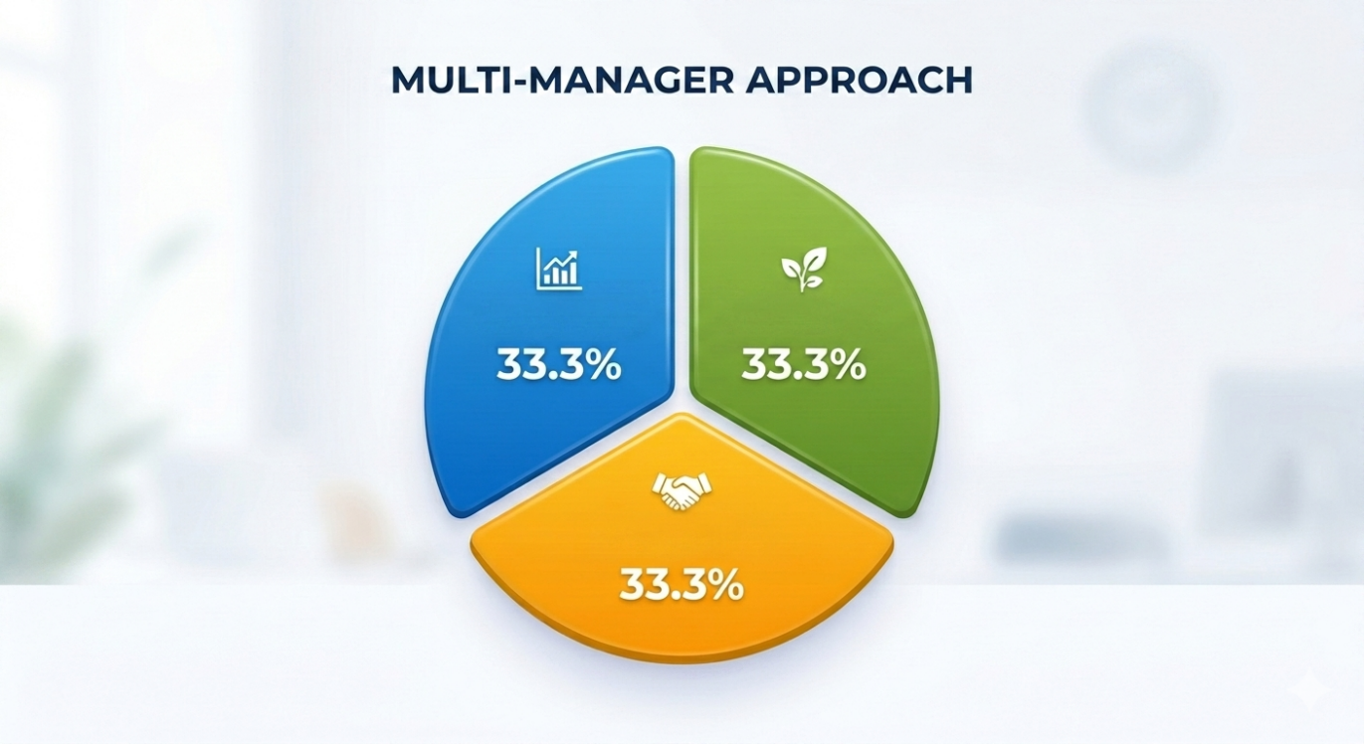
A multi‑manager approach blends two or three high‑quality KiwiSaver funds with complementary investment styles. This creates a more resilient portfolio. At Totara Wealth, this approach mirrors how we manage larger investment portfolios.
Benefits of Multi‑Manager KiwiSaver
Reduces reliance on any single manager
Smooths volatility by combining different styles
Improves consistency of returns over time
Reflects how large institutional portfolios are managed
Reduces the risk of long periods of underperformance
This approach is common in Australia, the UK, and the US — and increasingly in New Zealand as balances grow.
Understanding Your End Goal
KiwiSaver is not just an investment account — it’s a long‑term savings tool. For many New Zealanders, that means helping with a first‑home purchase earlier in life and building retirement savings over the long term. To manage it well, you need clarity on what you’re aiming for.
Is a First‑Home Purchase Part of the Plan?
For first‑home buyers, KiwiSaver can play a major role in building a deposit. If you have been a KiwiSaver member for at least three years, you may be able to withdraw most of your savings to help buy a home you intend to live in, while leaving at least $1,000 in your account.
How Much Do You Need at Retirement?
This depends on:
Desired lifestyle
Expected NZ Super
Other assets (property, investments, business interests)
Life expectancy
Inflation
Healthcare and aged‑care considerations
A typical couple aiming for a comfortable retirement may need $800,000–$1.2 million in combined investments (including KiwiSaver). But the right number varies widely.
How KiwiSaver Fits into Your Overall Wealth Plan
KiwiSaver is just one part of your financial picture. It interacts with:
Your home equity
Your investment portfolio
Your business or career income
Your debt strategy
Your insurance and estate planning
Your tax position
Your long‑term goals (retirement age, lifestyle, legacy)
Understanding this bigger picture helps determine:
How aggressively you should invest
How much you should contribute
Whether voluntary contributions make sense
How to balance KiwiSaver with other investments
How to plan withdrawals in retirement
Turning the Goal into a Plan
Once you know your target retirement balance, you can work backwards:
How much do you need to contribute?
What return is required?
What risk profile supports that return?
How do you adjust as life changes?
A goal without a plan is just a wish. KiwiSaver works best when it’s integrated into a clear, personalised wealth strategy.
Bringing It All Together
Managing KiwiSaver well comes down to three interconnected decisions:
1. Get Your Risk Profile Right
This ensures your investment mix matches your time horizon, temperament, and financial situation. It keeps you invested through market cycles and aligned with your long‑term goals.
2. Use a Multi‑Manager Approach
This reduces reliance on any single fund manager, smooths volatility, and improves consistency. It reflects how sophisticated portfolios are managed globally.
3. Know Your End Goal
Understanding how much you need at retirement — and how KiwiSaver fits into your broader wealth plan — gives purpose and direction to your investment decisions.
Why This Matters
KiwiSaver is becoming one of the largest financial assets for many New Zealanders. The decisions you make today will shape your financial security decades from now. A thoughtful, structured approach can add tens or even hundreds of thousands of dollars to your retirement outcome.
A Final Thought
KiwiSaver is simple, but not simplistic. When managed well, it can be a powerful tool for important life goals – from helping eligible first-home buyers build a deposit to strengthening your retirement position and long-term financial security.
If you would like to chat to us about your KiwiSaver, please let us know by filling out our KiwiSaver Questionnaire or give us a call on 0508 KIWISAVER.